
Last updated November 21, 2026
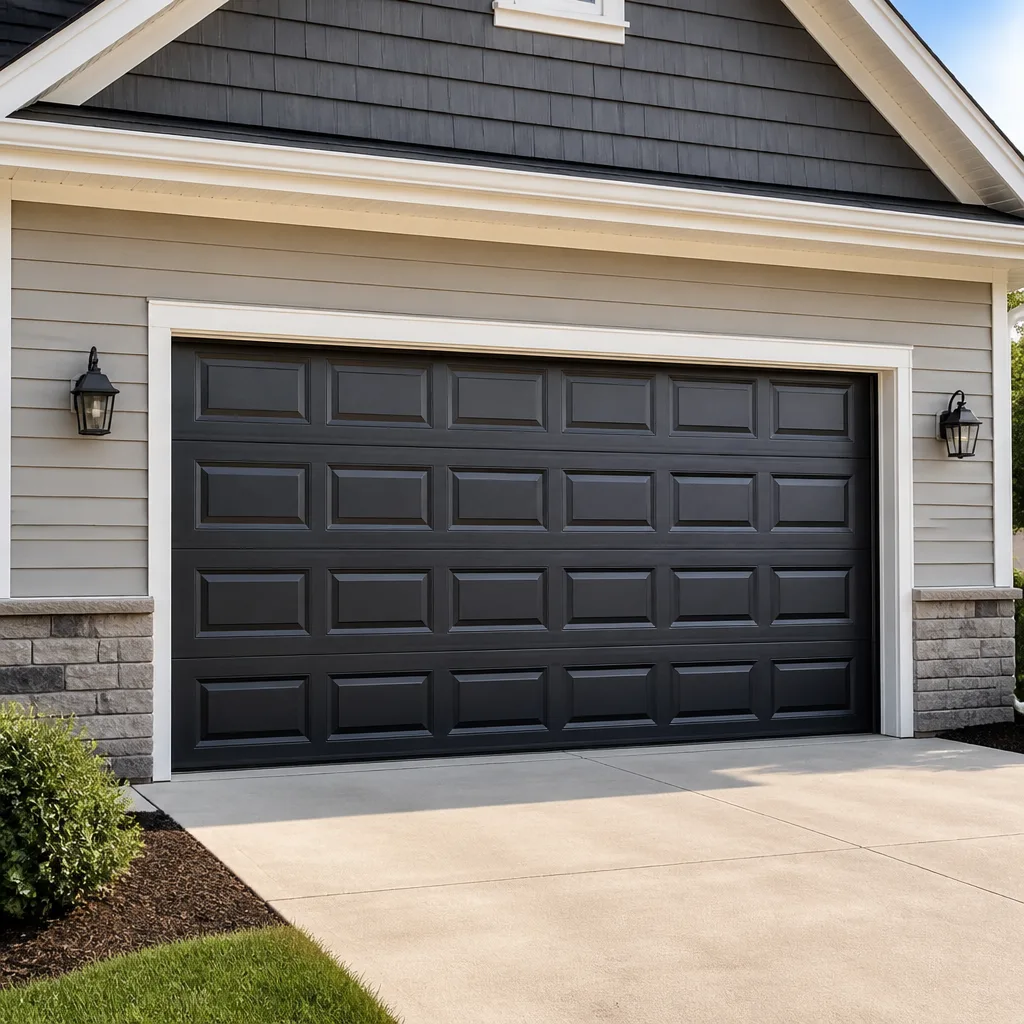 Raised-panel steel
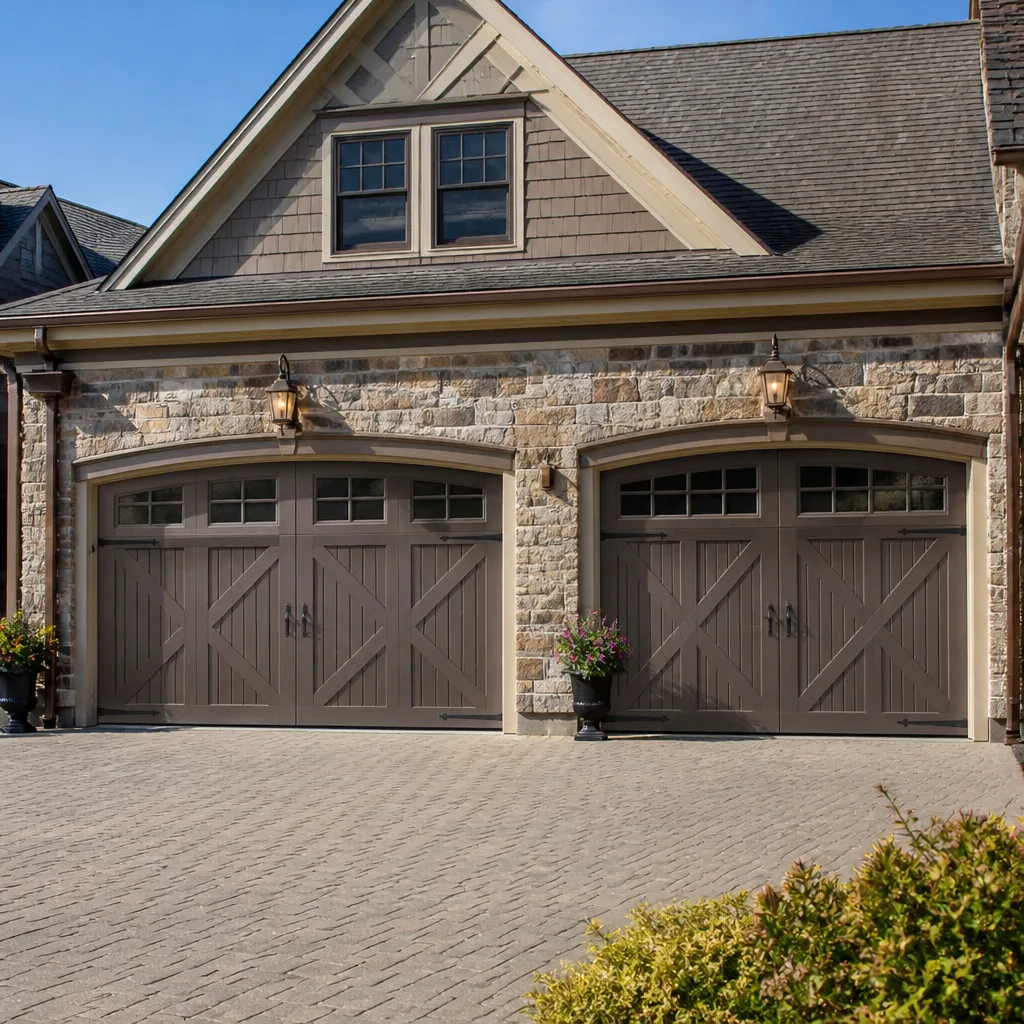 Carriage house
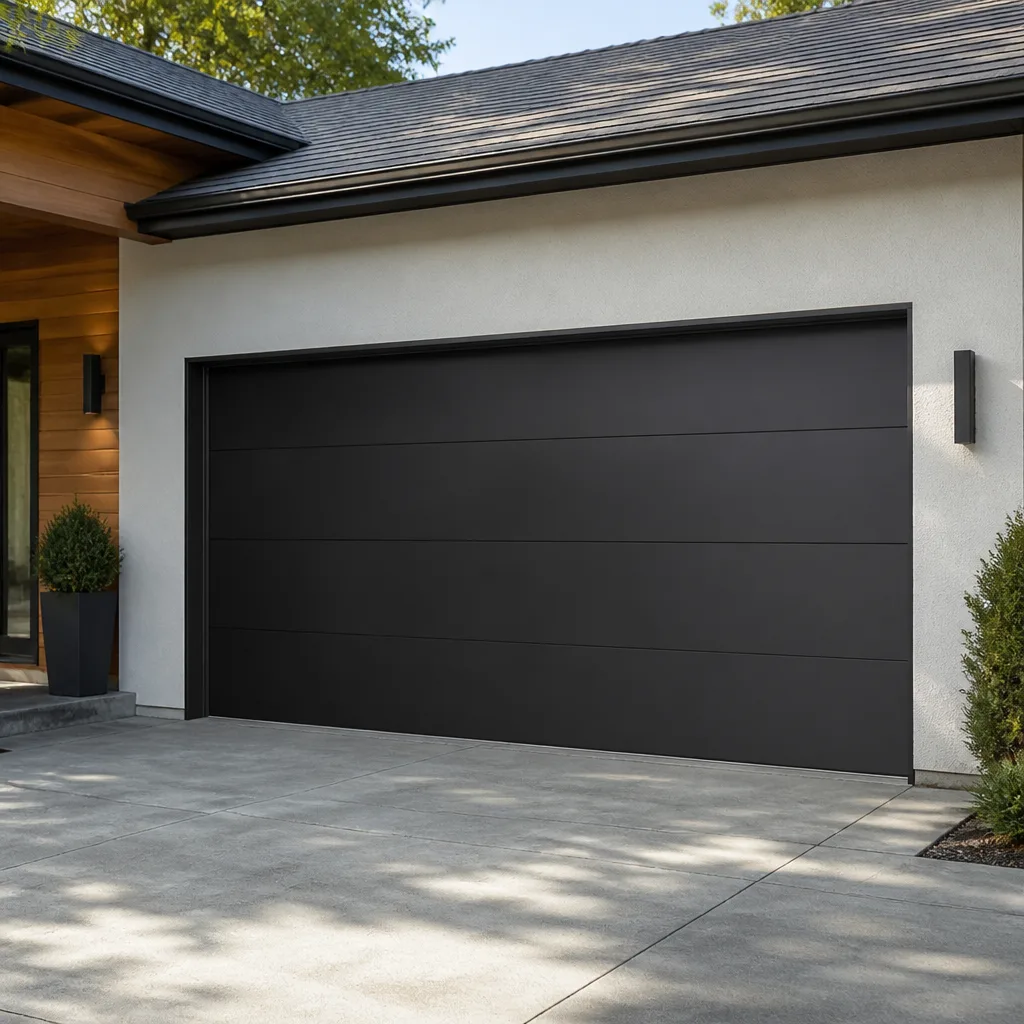 Modern flush
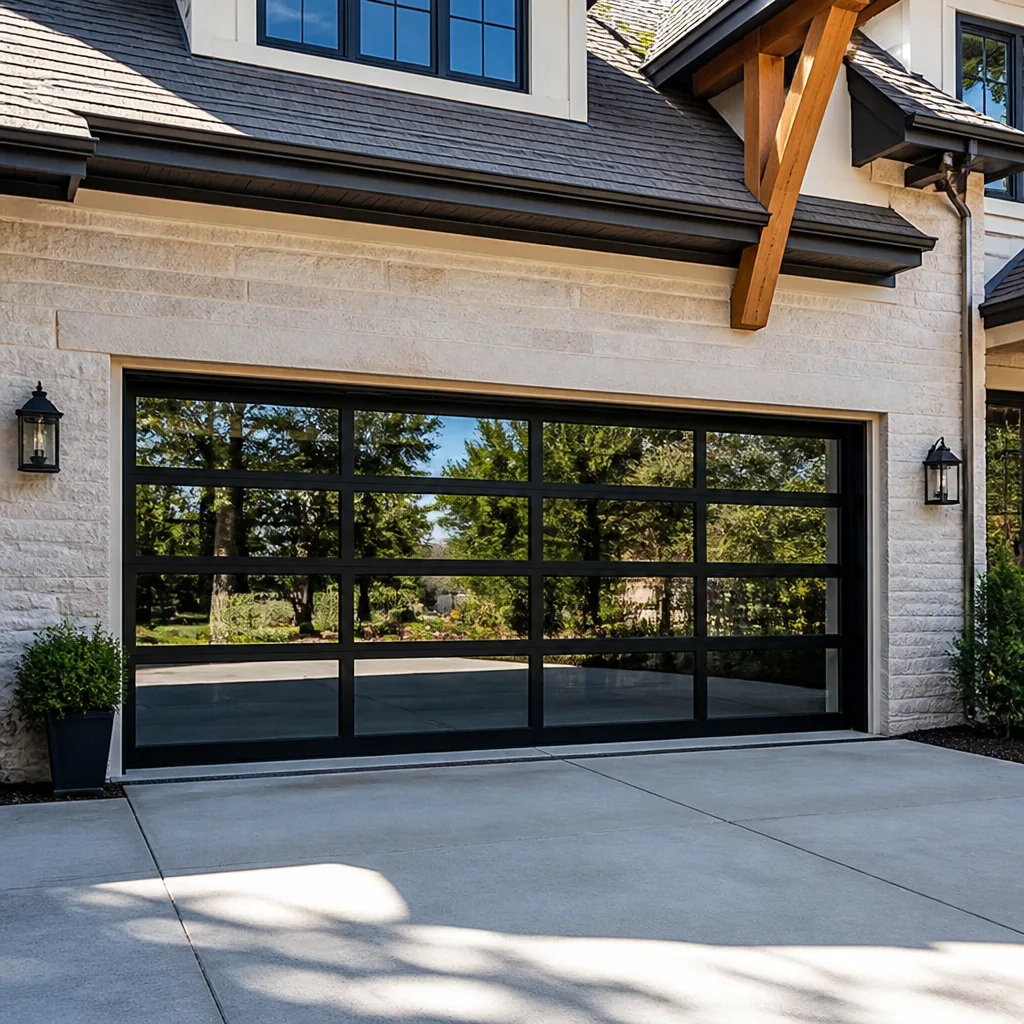 Full-view glass
 LiftMaster openers
 Chamberlain openers
Full 25-point door and opener safety check with every visit - springs, cables, rollers, tracks, and your LiftMaster or Chamberlain opener included
You get a price before we start. It does not change when the pro arrives.
Get your free estimateThe Complete Guide to Garage Doors in North Port
Most garage door guides are written for Ohio. North Port homeowners reading them are getting advice calibrated for a climate with no salt air, no Category 4 wind requirements, and no six-month humidity season. That mismatch matters more than people expect. A door spec that’s perfectly sensible in a dry, inland market can be the wrong choice for a house off Toledo Blade Boulevard, and a spring setup that lasts years up north can behave differently here. This guide covers what actually applies to a North Port address: Charlotte County wind requirements, how materials hold up in Gulf humidity and UV, why torsion springs make more sense than extension springs in Florida’s thermal cycling, and what “hurricane-rated” really means on a spec sheet. By the end you’ll know how to choose, maintain, and troubleshoot a garage door built for this specific place.
Quick Answer
A garage door in North Port needs to handle three things most generic guides ignore: salt-laden Gulf air that corrodes hardware, intense UV that degrades seals and finishes, and hurricane-season wind loads that Charlotte County code takes seriously. Choose a door rated for the wind zone your address falls in, favor torsion springs over extension springs, and inspect weatherstripping and bottom seals at least twice a year. Get those three right and the door will outlast one picked on looks alone.
Styles & brands we work with
- Raised-panel steel
- Carriage house
- Modern flush
- Full-view glass
- LiftMaster openers
- Chamberlain openers
Table of Contents
- How Charlotte County Wind Requirements Affect Your Door Choice
- Steel vs. Aluminum vs. Fiberglass: Which Holds Up in North Port?
- Why Torsion Springs Outlast Extension Springs in Florida
- Weatherstripping and Bottom Seals: Flooding, Pests, and Humidity
- What “Hurricane-Rated” Actually Means on a Spec Sheet
- Choosing and Maintaining a Garage Door Opener Here
- A Seasonal Maintenance Checklist for North Port Homes
- Repair or Replace? How to Decide
How Charlotte County Wind Requirements Affect Your Door Choice
Charlotte County enforces wind-load requirements on garage doors, and those requirements vary by where your home sits. North Port parcels fall into different wind zones, and the door that’s legal at one address may not meet the standard at another. This is the single biggest reason a national buying guide falls short here: it treats wind rating as an optional upgrade, when in North Port it’s often a baseline requirement tied to your specific location.
Wind-load ratings on garage doors are expressed as design pressure, usually noted on the door’s label or spec sheet. Your address determines what that number needs to be. Homes near the coast or in designated wind-borne debris regions face stricter requirements than inland parcels, and the distinction between a standard wind-load door and one built to High Velocity Hurricane Zone standards matters at permit time.
The practical steps look like this:
- Find your property’s wind zone. The county building department can confirm what applies to your parcel.
- Ask any installer to show the door’s design pressure rating in writing before you commit.
- Match that rating to your zone before you fall in love with a style or color.
- Confirm whether your project needs a permit, and pull one if required. Most door replacements do.
- Keep the door’s rating documentation. It matters if you sell, insure, or get inspected.
If you’re unsure where your parcel stands, your city’s building department is the authority, not a sales brochure. A door installed without the right rating can create problems at inspection or insurance review, and correcting it later costs more than getting it right the first time. When we quote a replacement in North Port, we ask about your parcel’s zone early because it shapes every recommendation after that.
Steel vs. Aluminum vs. Fiberglass: Which Holds Up in North Port?
Material choice in North Port comes down to how a door handles humidity, salt-laden air, and UV, not how it looks in a showroom. Each material behaves differently here than it does in a dry climate, and the differences show up in maintenance costs over the life of the door.
- Steel: The most common choice and the most affordable. Steel doors are strong and hold paint well, but in Gulf humidity the seams, hinges, and bottom edges are where rust starts. A quality finish and periodic touch-ups make a big difference. Steel is a good fit if you’re willing to keep up with it.
- Aluminum: Naturally rust-resistant, which makes it a sensible pick for coastal air. Aluminum is lighter, so it’s easier on the opener, and it won’t corrode the way steel can. It dents more easily than steel, so it favors homeowners who want low maintenance over maximum impact resistance.
- Fiberglass: Won’t rust or corrode at all, and it handles UV well when the finish is intact. Fiberglass tends to be lighter still, and some panels are translucent for light transmission. It can become brittle over long UV exposure if the surface finish isn’t maintained, so inspect it periodically.
In our experience, the material matters less than the finish and the hardware. A well-finished steel door with quality galvanized hardware outperforms a cheap aluminum door with off-brand hinges in this climate. Brands like Clopay and Amarr offer wind-rated options across several material lines, so you can match style to your wind zone without compromising on either. Whatever you choose, plan on inspecting hinges, rollers, and bottom edges at least twice a year. That’s where salt air does its work first.
Why Torsion Springs Outlast Extension Springs in Florida
Torsion springs generally outlast extension springs in North Port, and the reason is thermal cycling. Florida’s temperature swings, from hot afternoons to cooler nights and back again, work a spring through thousands of load and unload cycles over a year. Torsion springs handle that cycling more gracefully than extension springs, which stretch and relax along the horizontal tracks and tend to fail sooner in this environment.
The mechanical difference matters. Torsion springs mount on a shaft above the door and twist to counterbalance its weight. Extension springs run along the tracks and stretch as the door closes. Torsion systems distribute force more evenly, they run quieter, and they’re safer when they fail because the shaft restrains the spring. Extension springs can snap toward whatever is nearby when they let go.
How long each type lasts depends on cycle count more than calendar time. A door that opens and closes several times a day wears its springs faster than one used once a day. Torsion springs are typically rated for a higher cycle count than extension springs of comparable quality, which translates to more years of service in a house where the garage is the main entrance.
One safety note we won’t skip: garage door springs are under extreme tension, and adjusting or replacing them is one of the most dangerous jobs in home repair. We don’t recommend DIY spring work under any circumstances. If your door feels heavy, won’t stay up, or you hear a loud bang from the garage, stop using it and call a trained technician. That’s exactly the kind of specialist work our garage door spring repair handles, and it’s worth having someone who does nothing else.
Weatherstripping and Bottom Seals: Flooding, Pests, and Humidity
Weatherstripping and the bottom seal do more work in North Port than most homeowners realize. This region combines heavy seasonal rain, persistent humidity, and a steady pest population, and every gap in a garage door seal is an invitation to all three. A dry, well-sealed garage protects your car, your stored belongings, and the structure itself.
The bottom seal is the first line of defense. It’s the rubber or vinyl strip along the bottom edge of the door, and it’s what keeps water from blowing in during a storm and keeps insects, mice, and snakes from finding their way inside. In a humid climate the seal also keeps moisture from creeping under the door and condensing on the slab. A worn, flattened, or cracked bottom seal is one of the cheapest problems to fix and one of the most expensive to ignore.
Side and top weatherstripping, usually in the door jamb, stops drafts and water driven sideways by wind. Check it for tears, hardening, or sections that have pulled away. Vinyl that has baked in the Florida sun turns brittle and stops sealing well even if it still looks in place.
A simple inspection routine:
- Close the door and look for daylight along the bottom and sides. Any visible light is a gap.
- Press on the bottom seal. It should feel pliable, not hard or flattened.
- Look for water staining or dirt trails on the garage floor near the door, which suggest water or pests are getting in.
- Run a hand along the jamb weatherstripping for cracks or loose sections.
- Replace seals at the first sign of hardening rather than waiting for a visible failure.
Replacing weatherstripping is straightforward, but if the door itself is out of alignment, new seals won’t close the gaps for long. Persistent gaps usually point to a track, roller, or spring issue that needs a professional look. For any of that, our garage door repair team can diagnose the cause rather than just patching the symptom.
What “Hurricane-Rated” Actually Means on a Spec Sheet
“Hurricane-rated” on a garage door spec sheet means the door has been tested to withstand a specific design pressure, and that number is what matters for a North Port address. The phrase alone tells you very little. Two doors both labeled hurricane-rated can have different ratings, and only one may meet the requirement for your parcel.
Here’s what to look for on the documentation:
- Design pressure rating: A number, often in psf, that tells you how much wind load the door can handle. It must meet or exceed what your wind zone requires.
- Impact rating: Some doors are tested for wind-borne debris impact in addition to pressure. Whether you need that depends on your zone and your parcel’s designation.
- Test standard: Reputable manufacturers list the standard the door was tested to. Ask for it in writing.
- Reinforcement: Wind-rated doors often use heavier tracks, additional hinges, or a bracing system. That reinforcement is a real part of the product, not an add-on.
The gap between the label and your address is where problems happen. A door rated for a lower wind zone can be sold in this market, but it won’t satisfy the requirement for a parcel that needs more. Before you buy, have your installer confirm the rating matches your location in Charlotte County. If you’re not sure, the county building department can tell you what applies.
If you want the peace of mind of a properly rated door, our North Port Garage Door Repair Co team can walk you through the options and confirm the paperwork before anything is ordered. Getting the rating right at the start avoids the cost of replacing a door that never should have been installed.
Choosing and Maintaining a Garage Door Opener Here
A garage door opener in North Port faces heat and humidity that shorten the life of components not built for it, so the unit you choose and how you maintain it both matter. The opener is the most common failure point after the springs, and most opener problems give warning signs before they quit.
When choosing an opener, match the unit to your door. A heavier, wind-rated door needs an opener with enough lifting capacity and a drive system that can handle the load. Belt-drive openers run quieter and are a good fit for a garage attached to living space. Chain-drive units are durable and often less expensive but louder. Jackshaft openers mount on the side and free up ceiling space, which some homeowners prefer.
Smart features and battery backup are worth considering in a storm-prone area. A backup battery keeps the door working during a power outage, which matters when you need to get a car out. Wi-Fi connectivity lets you check and control the door remotely, useful if you’re away during a storm.
Maintenance keeps an opener running longer:
- Test the safety reverse feature monthly by placing an object in the door’s path. The door should reverse on contact.
- Lubricate the chain or screw drive lightly once or twice a year, following the manufacturer’s guidance.
- Keep the photo-eye sensors clean and aligned. A dirty sensor is the most common cause of a door that won’t close.
- Check the force settings if the door struggles, but don’t increase them to mask a mechanical problem.
- Listen for new noises. Grinding or straining usually points to a door issue the opener is straining against.
If your opener is failing, our garage door opener repair covers the brands we know best, including Genie and Chamberlain units. We diagnose brand-specific issues quickly because those systems are all we work on.
A Seasonal Maintenance Checklist for North Port Homes
Twice-a-year maintenance is what keeps a garage door working in North Port’s climate. The UV exposure and humidity here are harder on seals, finishes, and hardware than in cooler, drier regions, so a little routine attention goes a long way. Spring and fall are natural times to run through the list.
Here’s the checklist we recommend:
- Look at the springs. If you see a gap in a torsion spring or a stretched extension spring, stop using the door and call a professional.
- Check the cables for fraying, kinks, or rust. Cables are under tension and should be handled by a trained technician.
- Inspect hinges, rollers, and tracks. Tighten loose hardware and wipe tracks clean, then apply a silicone-based lubricant to moving parts, not grease.
- Test the auto-reverse feature with an object in the door’s path, and test the photo-eye sensors.
- Check the bottom seal and jamb weatherstripping for hardening, cracks, or gaps.
- Touch up paint or finish on steel doors, especially at the bottom edge and around hardware, where rust begins.
- Listen to the door as it runs. New rattles, squeaks, or uneven movement are early warning signs.
One thing to leave to a professional: spring, cable, and track adjustments. Those components are under high tension, and a mistake can cause serious injury. We include that caution in every conversation about maintenance because it’s the part of garage door care that homeowners most often underrate. If any of the checks turn up something that needs fixing, the team at North Port Garage Door Repair Co can take a look and give you a straight answer.
Repair or Replace? How to Decide
Repair usually wins when the door’s structure is sound and the problem is a single component. Replace when multiple systems are failing at once or the door no longer meets the wind-rating requirement for your parcel. The decision comes down to the door’s condition, its rating, and what you plan to do with the house.
Here’s how to think through it:
- One broken component, otherwise good door: Repair. A snapped spring, a failed opener, or a replaced bottom seal is routine work.
- Repeated spring or opener failures: The door may be out of balance or heavier than the hardware was built for. A technician can assess whether rebalancing solves it or the door is the problem.
- Rust, dents, and multiple failing parts: Replacement often makes more sense than chasing repairs on a door that’s nearing the end of its life.
- Undersized wind rating: If your door doesn’t meet the requirement for your parcel, replacement fixes a compliance issue that repairs can’t.
- Major remodel or long-term ownership: A new wind-rated door adds value and performance, especially if the current door is aging.
When in doubt, get an assessment before committing to either path. A technician who works on garage doors every day can tell you quickly whether a repair will hold or whether you’d be spending good money after bad. We quote repairs and replacements honestly, and we’ll tell you when repair is the smarter call.
Common Mistakes to Avoid
- Buying a door based on looks alone. A beautiful door with the wrong wind rating for your North Port parcel fails at permit or insurance review. Check the rating before the style.
- Ignoring the bottom seal. In a region with heavy rain and pests, a worn bottom seal lets water and animals in. It’s cheap to replace and costly to skip.
- Choosing extension springs to save money. In Florida’s thermal cycling, torsion springs generally outlast extension springs, so the savings often come back as a second repair.
- Doing spring or cable work yourself. These parts are under extreme tension and cause serious injuries every year. This is one repair to always leave to a trained technician.
- Increasing the opener’s force setting to fix a struggling door. That masks a door problem and stresses the opener. Find the real cause instead.
- Skipping the permit. Most door replacements need a permit. Installing without one creates problems when you sell or insure the home.
- Using the wrong lubricant. Grease attracts dust and grit. A silicone-based lubricant is the right choice for tracks and moving parts.
See the difference
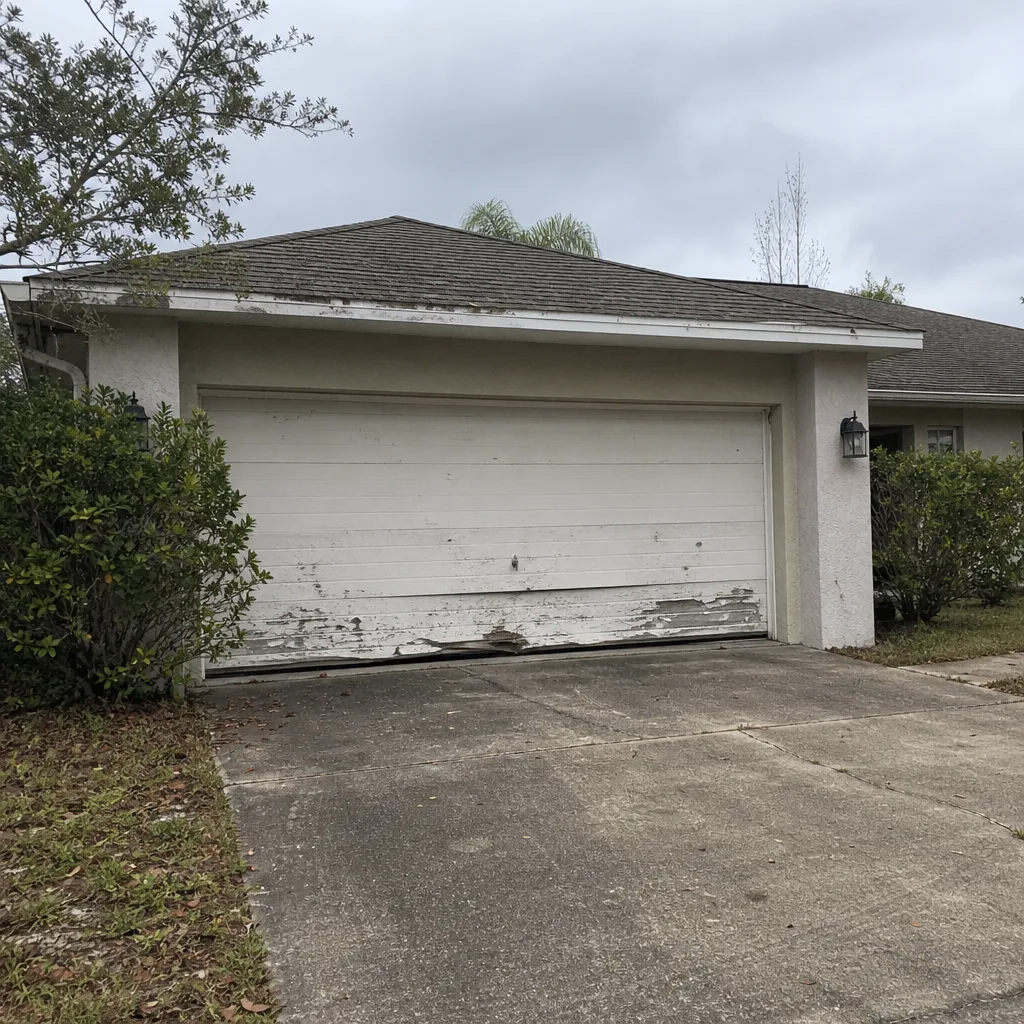 Before
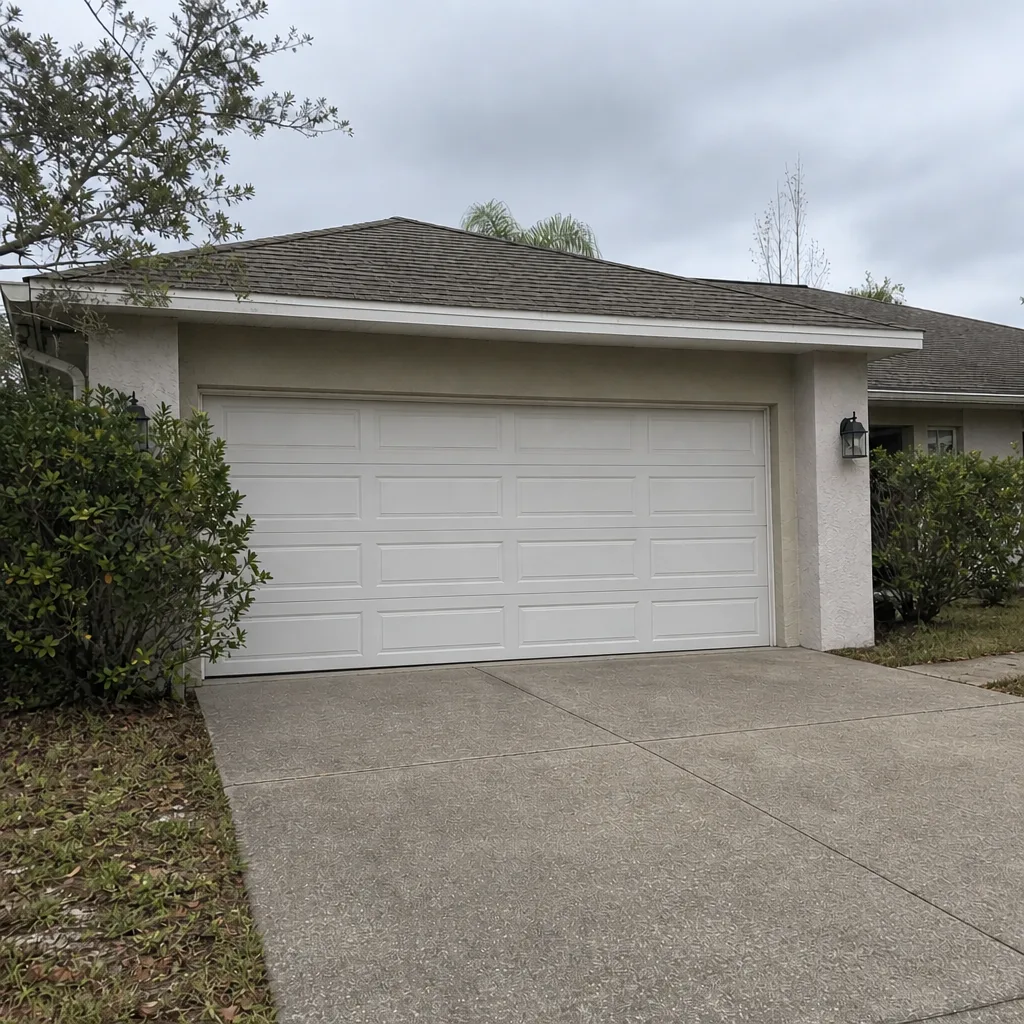 After
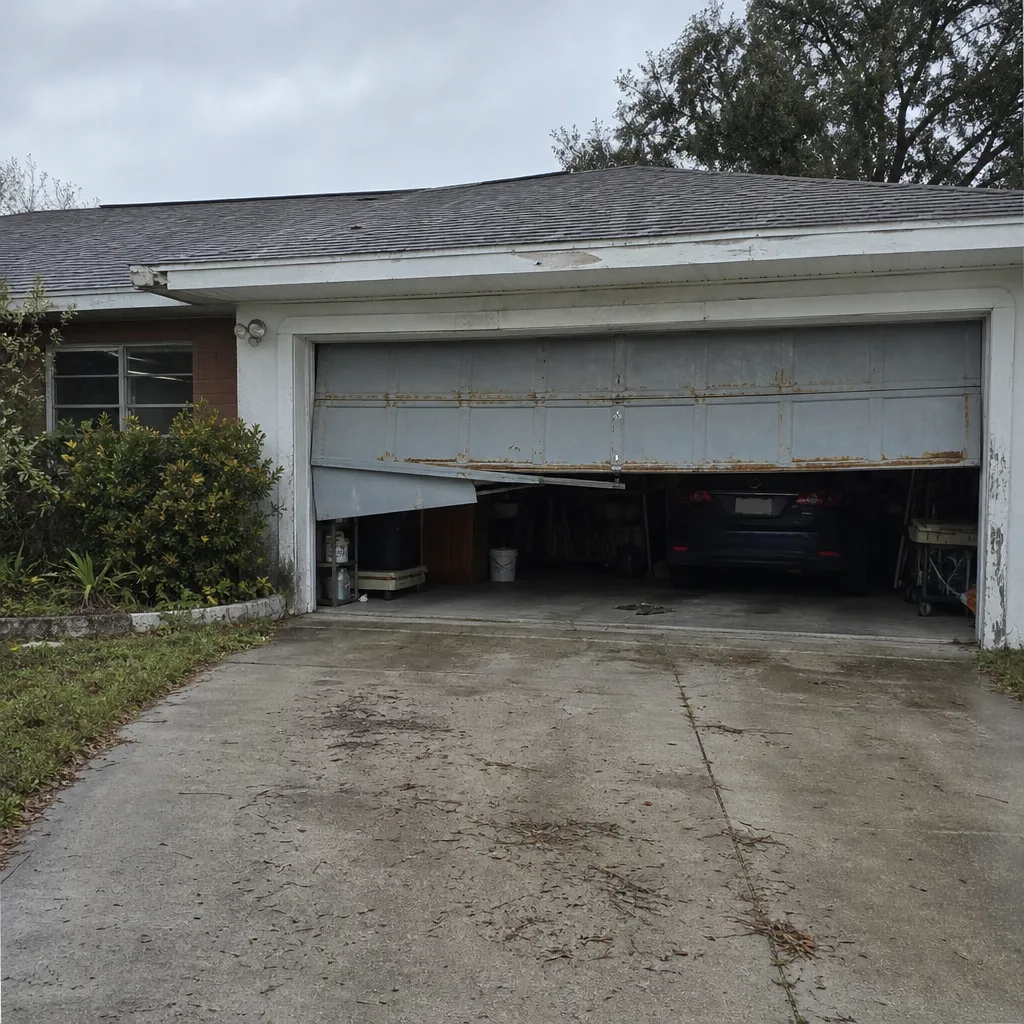 Before
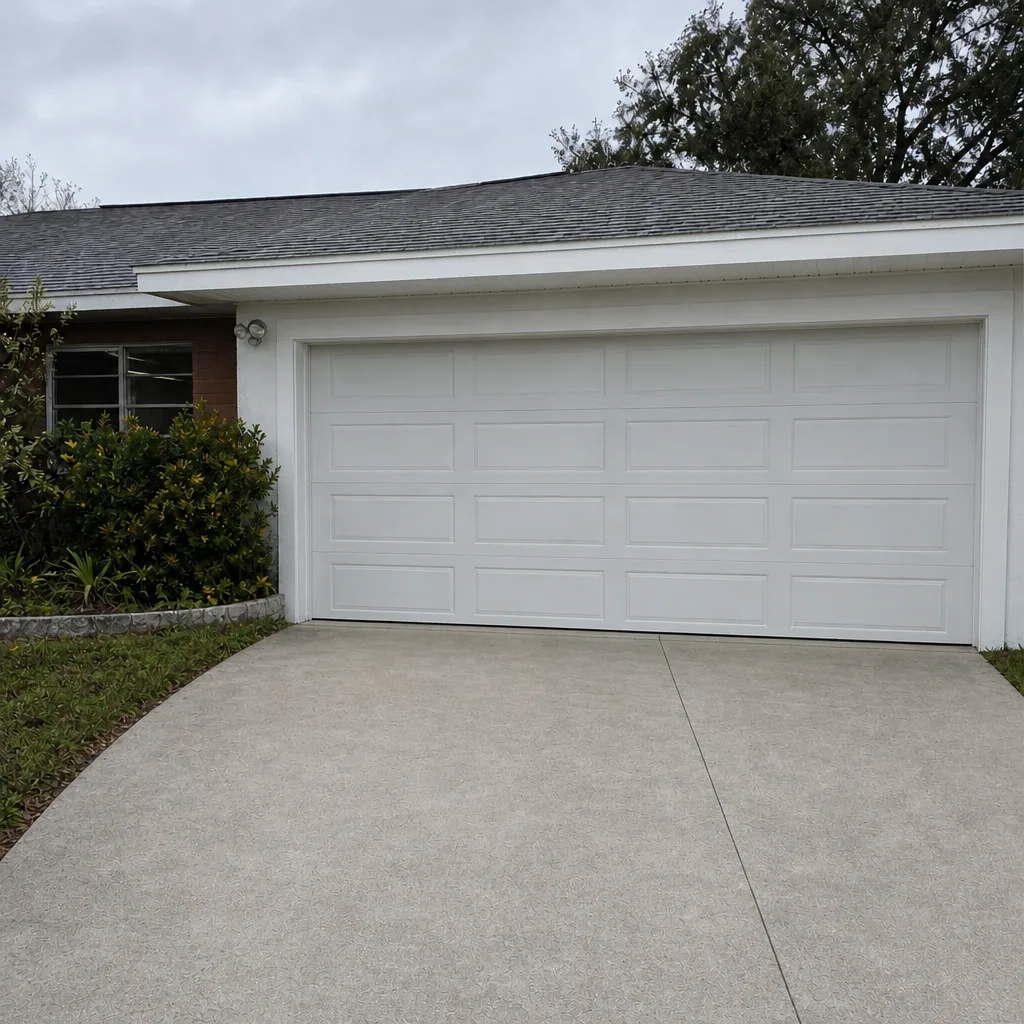 After
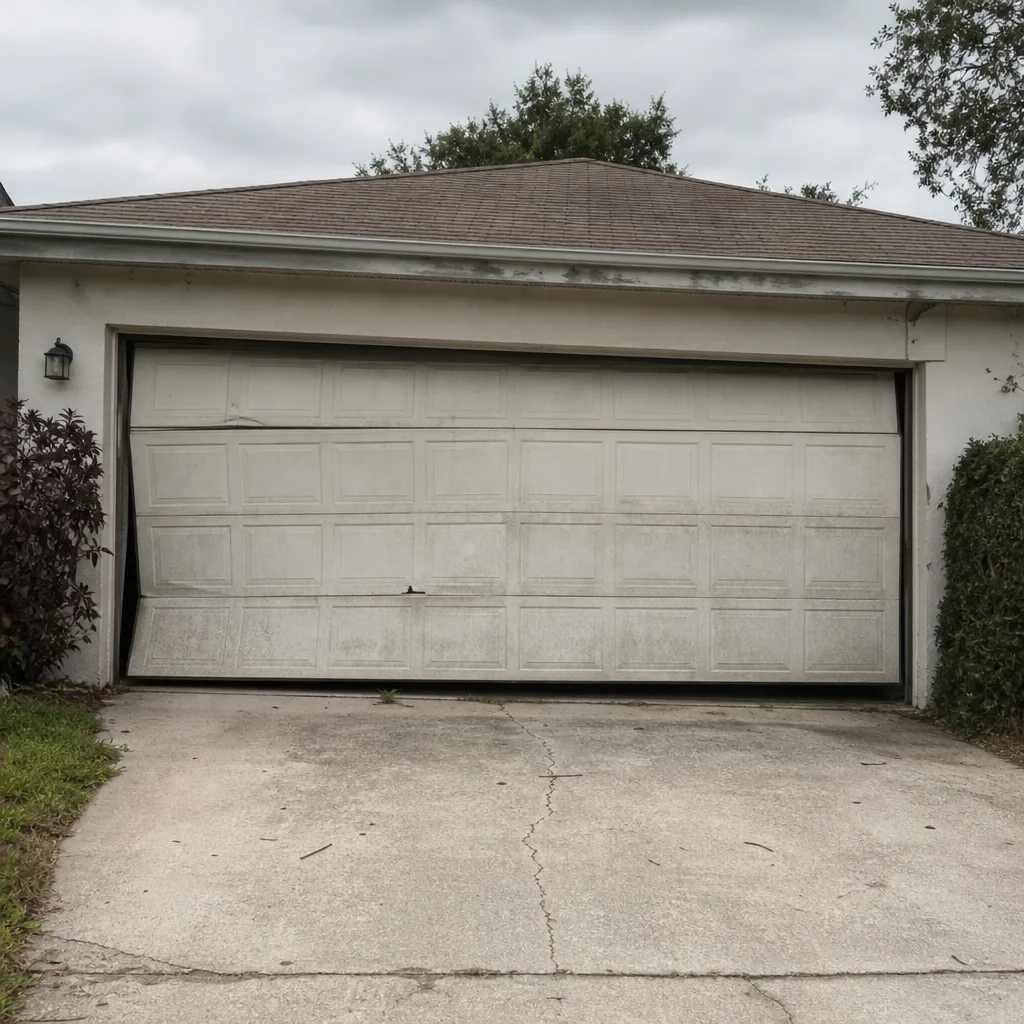 Before
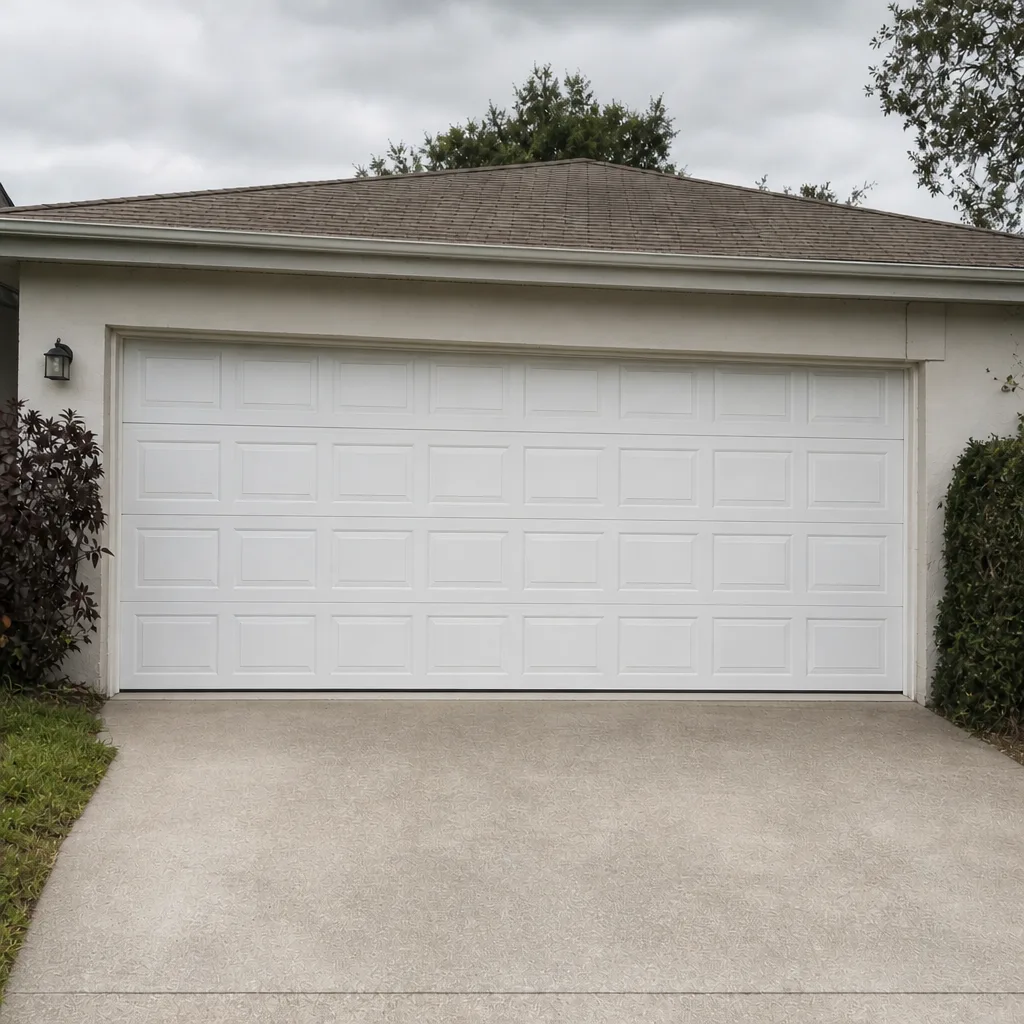 After
When to Call a Professional
Some garage door problems are genuinely worth a call, and pretending otherwise can get someone hurt or cost more later. Call a professional if the door won’t open or close, if you hear a loud bang and the door feels heavy, if the door is visibly off its tracks, or if a spring shows a gap. Frayed cables, uneven movement, and a door that reverses for no reason all warrant an inspection. Opener issues that persist after a basic sensor check are worth a technician’s look too.
North Port Garage Door Repair Co offers free estimates in North Port, and our technicians have up to 11 years of experience with the brands on your door. Call (877) 600-5101. We answer 24/7. Fast dispatch from 7am to 7pm, Sunday through Friday.
Frequently Asked Questions
The best door for a North Port home is one rated for the wind zone your parcel falls in, paired with a material that handles Gulf humidity and UV. Steel is the most affordable and common, aluminum resists corrosion well, and fiberglass won’t rust or corrode at all. Start with the wind rating, then choose the material based on how much maintenance you want to do. For an exact quote on a door that fits your address, call (877) 600-5101. Estimates are free.
Springs fail faster here because of thermal cycling. Florida’s daily temperature swings work a spring through more load-and-unload cycles than a stable climate does. Torsion springs generally handle that cycling better than extension springs, which is why we recommend them. A door that opens and closes several times a day wears its springs faster than one used once a day. If a spring has snapped, stop using the door and call a professional.
Most garage door replacements in North Port need a permit, and the requirements depend on your parcel and its wind zone. Check with the city’s building department before work begins. A professional installer can help you confirm what applies and make sure the door’s rating matches what your address requires. Getting the permit and rating right protects you at resale and at insurance review. Call (877) 600-5101 to talk through your project. Estimates are free.
“Hurricane-rated” means the door has been tested to withstand a specific design pressure, given as a number on the spec sheet. The phrase alone isn’t enough; you need to match that number to your property’s wind zone. Some doors also carry impact ratings for wind-borne debris. Always ask for the rating documentation in writing before you buy.
Many garage door repairs in North Port can be handled the same day, especially spring, opener, and track issues. Call (877) 600-5101. We answer 24/7. Fast dispatch from 7am to 7pm, Sunday through Friday. A technician will confirm the problem and quote the repair before any work starts, so you know the price up front.
Torsion springs are generally the better choice in North Port because they outlast extension springs in Florida’s thermal cycling environment. They also run quieter and are safer when they fail, since the shaft restrains the spring. Extension springs can snap toward nearby objects. Either way, spring work is dangerous and should be handled by a trained professional.
The Bottom Line
A garage door in North Port is a different proposition than a generic guide suggests. Wind ratings tied to Charlotte County requirements, salt-laden Gulf air, intense UV, and a long humidity season all shape what works here. Start with the wind rating your parcel needs, choose a material you’re willing to maintain, favor torsion springs, and keep the seals in good shape. Do those things and the door will hold up far better than one picked on looks alone. When something needs fixing, a specialist who works only on garage doors will diagnose it faster and fix it right.
Contact
If your door needs repair, a new opener, spring work, or a full replacement, get a free estimate from a team that does nothing else. Call North Port Garage Door Repair Co at (877) 600-5101 to book a visit and get an upfront price before any work begins.
Written by the team at North Port Garage Door Repair Co.