
Top Signs You Need Garage Door Service – Don’t Ignore These
The signs you need garage door repair are usually mechanical, not cosmetic: slower travel than six months ago, a door that drifts down on its own, uneven gaps at the floor, grinding or popping sounds, and rust on the bottom roller brackets. Each one points to a specific part already failing. A garage door that takes two seconds longer to open than it did last year isn’t “getting old” – it’s a measurable sign that spring tension has dropped below what the opener motor was designed to lift, and that motor is now carrying load it was never built for. If you’d rather not climb a ladder to investigate, call (877) 600-5101 and we’ll take a look.
What Does the Balance Test Tell You About Your Springs?
The balance test is the fastest way to measure spring wear before it turns into a snapped spring. Close the door, pull the release cord to disconnect the opener, then lift the door by hand to about halfway and let go. A healthy door stays put. A door that sinks on its own means the springs have lost tension. A door you can barely lift means they’ve lost most of it.
This is the one diagnostic we wish every homeowner in North Port ran once a season. Springs are rated for a set number of open-and-close cycles, and every cycle removes a sliver of tension. The door still opens, so nothing seems wrong – until the morning it doesn’t. Running that test tells you where you stand instead of guessing.
Here’s what the results mean:
- Door holds at halfway: springs are carrying their share of the weight.
- Door drifts down slowly: tension has dropped; the opener is compensating and wearing faster.
- Door drops fast or feels very heavy: springs are near failure. Stop using the door and have it checked.
- Door lifts easily but won’t stay: tension is too high, which strains the opener and the cables.
One safety note before you start: never try to adjust, wind or remove a torsion spring yourself. Those springs hold enough stored force to cause serious injury, and the hardware can release without warning. The balance test is a hands-on observation, nothing more. Leave the actual repair to a trained technician.
Which Sounds Point to Which Failing Part?
Garage door noises aren’t random – each sound tracks to a specific component, and matching the sound to the part saves you from paying for the wrong fix. A grinding opener, a squealing roller and a popping cable drum are three different failures with three different repairs. Here’s how to tell them apart:
- Grinding from the opener unit itself: worn gears or a failing drive inside the motor. Common on older chain-drive units, and something we check first on Genie and LiftMaster openers.
- Squealing or chirping from the door: dry or worn rollers and hinges, usually fixed with lubrication or replacement. Annoying, but rarely urgent.
- A sharp pop or bang from above the door: a cable drum slipping or a cable jumping its track. This one stops the door safely and needs a technician.
- Rattling that gets worse over weeks: loose brackets and fasteners working themselves free from vibration.
- A loud snap followed by a door that won’t lift: a broken spring. Stop using the opener immediately.
If your opener is the source of the noise, that’s a job for garage door opener repair, not a general tune-up. A specialist can identify brand-specific wear patterns quickly – the internal parts on a Chamberlain and a Craftsman look alike until you open them up. Listening closely for a week before you call gives us a head start on diagnosis.
Why Is an Uneven Door a Cable Problem, Not a Track Problem?
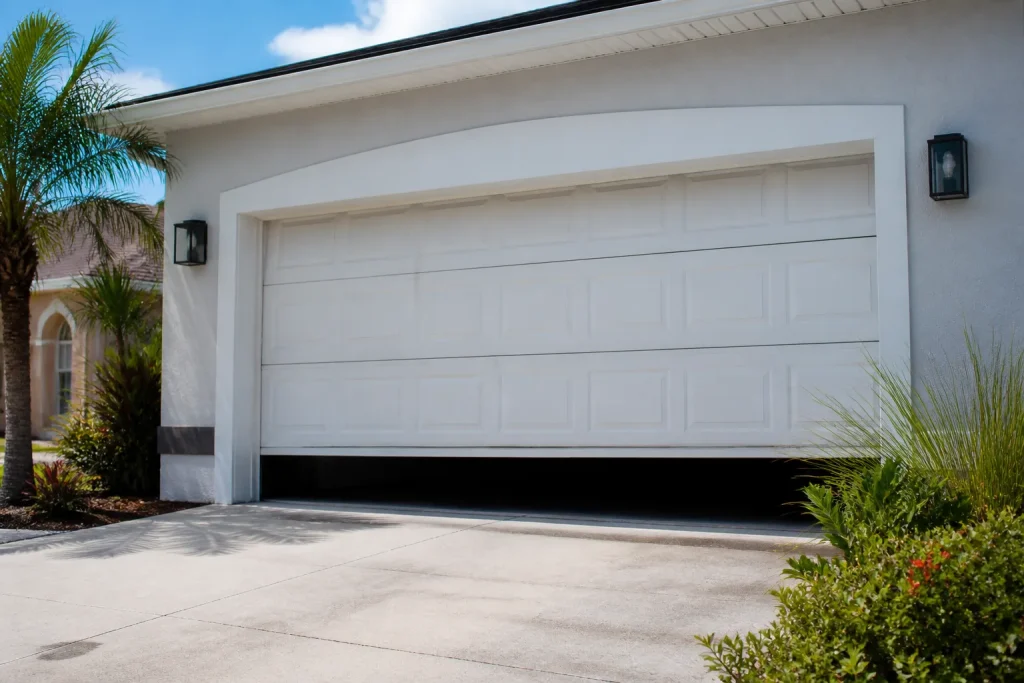
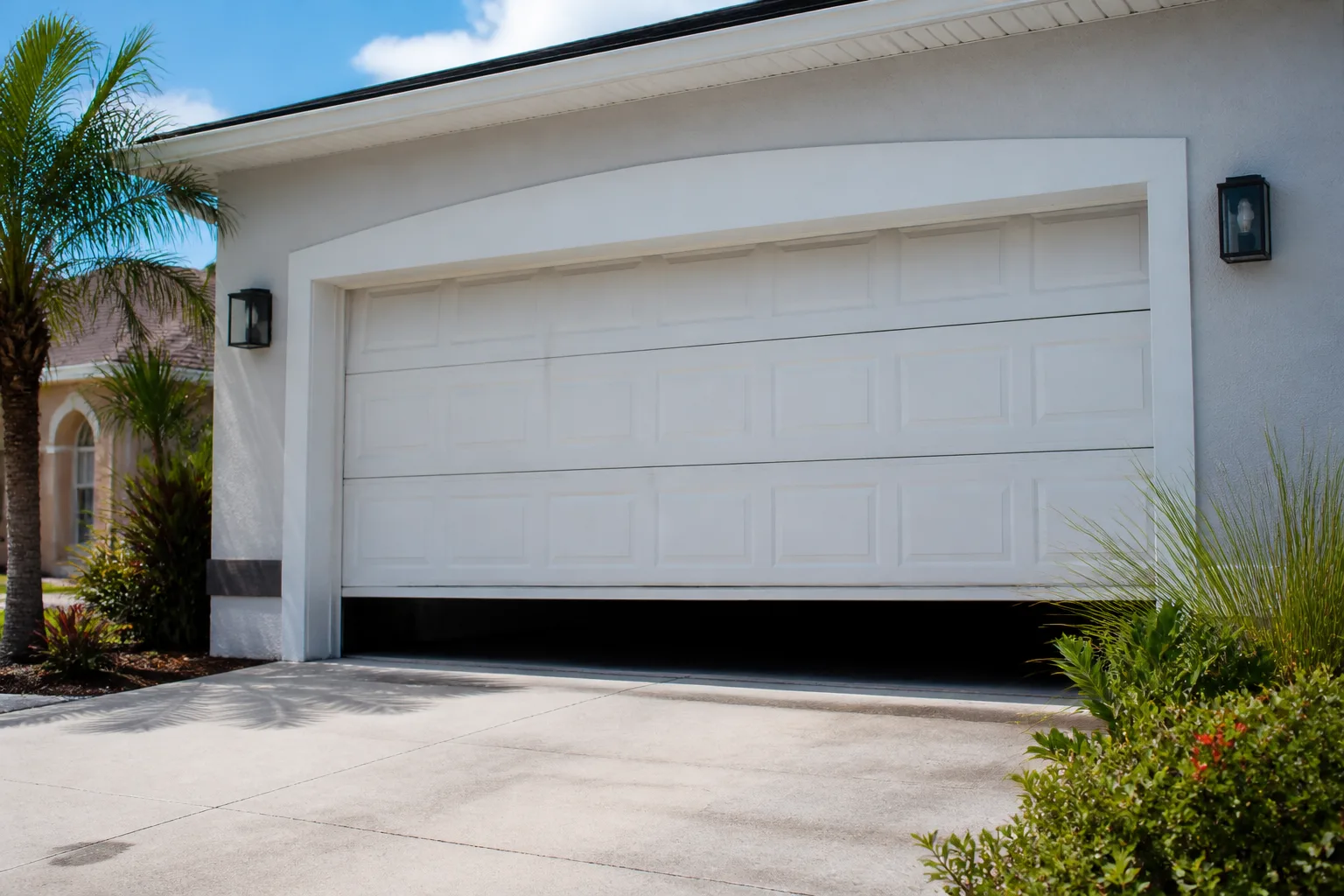
An uneven door – one side sitting lower than the other – is almost always a cable problem, not a bent track. The two lift cables work as a pair, and when one stretches, frays or slips its drum, that side of the door lags behind. Homeowners often blame the track because the gap is visible at the floor, then spend money straightening a track that was never the issue.
Look at the cables themselves. A healthy cable is tight and evenly wound on its drum. A failing one shows frayed strands, a loose wrap, or slack on one side. The track, by contrast, usually fails from a physical impact – a bump from a car or a ladder – and the damage is local and visible.
Misreading this is expensive in two ways. You pay for a track repair that doesn’t solve the problem, and the real cable issue keeps getting worse while the door runs crooked, straining the opener and the panels. A door that’s been uneven for a while often develops a bowed bottom panel from the uneven load. If you notice the gap in North Port, have the cables inspected before you use the door again. A snapped cable can whip with real force, so this isn’t a part to handle without training.
Why Does My Door Stick Only in Summer or Only in Winter?
A door that sticks in one season and glides in another is telling you something about the frame, the track or the door material – not the opener. North Port’s temperature swings between summer and winter move wood and steel at different rates. Wood door frames and jambs swell in humid summer air and shrink back in the drier winter months, which can pinch the door against the frame. Steel tracks expand and contract too, and a track that’s slightly out of alignment can bind only when the temperature pushes it that way.
What it usually signals:
- Sticking in humid summer months: a wood frame or jamb has swelled and is rubbing the door edge. Often a Clopay or Amarr wood-composite door settling against its opening.
- Sticking in cooler, drier months: the frame has shrunk, the track has shifted, or a roller has worn enough to bind in cold weather.
- Binding in one spot only: a track out of plumb or a bent section, not a seasonal issue at all.
Track and frame adjustments look simple and aren’t. The door has to stay level and balanced through the whole travel, and small changes in one place throw off the other. This is where garage door repair earns its keep – the right adjustment fixes the season problem for good instead of patching it until next year.
What’s the Sign North Port Homeowners Almost Always Miss?
The sign most North Port homeowners overlook is corrosion on the bottom roller brackets, and it comes from lawn irrigation overspray. Sprinkler heads aimed toward the garage spray the bottom corners of the door every cycle. The brackets sit low, hold moisture against the steel, and rust from the inside out. It starts as a light orange dust and moves to pitting, then to full bracket failure faster than most people expect.
We see it often because the bottom of the door is out of sight and out of mind. The brackets are what hold the bottom rollers in line, so when they corrode and fail, the door drops off its track and jams – usually when someone is trying to leave. A Wayne Dalton door with steel brackets and a standard roller setup is especially prone when the sprinklers hit the same corner day after day.
What to look for:
- Orange or brown staining on the bottom brackets and lower hinge plates.
- Flaking metal or rust dust on the garage floor near the door corners.
- A bottom roller that looks misaligned or wobbles in its bracket.
- Water spots or damp ground at the base of the door after the sprinklers run.
If you see any of this, adjust the sprinklers away from the door and get the brackets checked. Catching it early is a bracket replacement. Catching it late is a door off its track.
When Should You Call a Pro Instead of Watching and Waiting?
Call a pro the moment you notice any sign that involves springs, cables or a door that won’t stay balanced – those parts hold stored force and can injure you. Symptoms like squealing rollers or minor rattles can wait for a scheduled visit. The line is simple: if the part moves under tension or holds the door’s weight, it’s a professional job.
Other situations that warrant a call:
- A door that reverses before it closes, or closes on something and won’t reopen.
- A door stuck open or closed when you need to get the car out.
- An opener that hums but doesn’t move the door.
- A door that runs but has clearly gotten heavier or noisier over months.
When your door won’t move, waiting isn’t an option, and emergency service is available. Our technicians have up to 11 years of experience, and garage doors are the only trade we work in – so the diagnosis is specialist-level, not a generalist guess. Brands like Genie and LiftMaster have their own failure patterns, and we know them cold.
Related services in North Port: if you’ve traced the problem to a worn spring rather than the opener, see garage door spring repair for what that job involves and how to tell when it’s time.
The Bottom Line
Most of the warning signs in this post look like normal aging. They aren’t – each one is a mechanical indicator that a specific part is already failing, and reading them early is what keeps a small repair from becoming a stranded car and a jammed door. Run the balance test once a season, listen to what your door is telling you, and check the bottom brackets for rust after the sprinklers run.
If you’re in North Port and need help, North Port Garage Door Repair Co offers free estimates – call (877) 600-5101. We answer 24/7. Fast dispatch from 7am to 7pm, Sunday through Friday. The price is quoted and agreed before any work starts, and the written estimate is the price.
Frequently Asked Questions
A door that sinks on its own during the balance test, feels unusually heavy when lifted by hand, or has lost its smooth travel is telling you the spring is near failure. A visible gap in a torsion spring coil is a confirmed break. Stop using the door and have it inspected – springs are under extreme tension and are dangerous to touch. Our technicians can test and replace them safely, and the estimate is free. Call (877) 600-5101.
Yes, many common repairs can be handled the same day, especially broken springs, cables and opener faults that leave your car stranded. We answer 24/7, and a call outside dispatch hours is booked into the next opening, Sunday through Friday, 7am to 7pm. Call (877) 600-5101 for a same-day appointment.
It’s usually a real problem, not just a quirk. Sticking in one season points to a swelling frame, a shifting track or a worn roller binding only under certain temperatures. Left alone, the binding strains the opener and wears the door unevenly. A proper adjustment fixes it for good. Call (877) 600-5101 for a free estimate on the fix.
The cost depends on the part and the door, and we set the price per job with a written estimate you approve before work starts. There’s no surprise invoice once the estimate is agreed. If you’re not sure which part is failing, our balance test walkthrough above gives you a head start on the diagnosis. Call (877) 600-5101 – the estimate is free, and we’ll tell you exactly what’s wrong and what it costs.
Written by the team at North Port Garage Door Repair Co.
Need Garage Door Help?
Call North Port Garage Door Repair Co - the local pro we connect you with is licensed and insured, here with fast help in North Port.
(877) 600-5101